乌兹别克斯坦外商投资政策
1.1
概述
自2016年以来,乌兹别克斯坦实行了较之前更为开放的外交与经济政策,欢迎外商投资这片充满机遇的热土。根据《乌兹别克斯坦—2030战略》的构想,乌在经济领域的最重要发展目标之一便是提高外资吸引力,争取到2030年吸引投资总额达到2500亿美元,其中外国直接投资达到1100亿美元,公私合营投资达到400亿美元。其吸引外资的目的在于鼓励外资在乌建立工业生产型企业,利用国内资源发展进口替代生产,减少相关产品进口;调整经济结构,使国有及公有制经济与私营经济在国民经济中的占比更加合理;通过外资引进先进技术与工艺,提高产品质量、科技含量和附加值,增强本国产品在世界上的竞争力;生产出口导向产品,鼓励本国产品出口,改善国际收支;鼓励小企业与私营企业发展,解决就业问题,改善民生。

图片来源于豆包AI
1.2
外商投资限制
尽管近年来乌兹别克斯坦政府重视招商引资,国内行政效率不断提高,营商环境持续改善,但如前文所述,乌法律体系并不健全,缺乏系统性、复杂繁琐,时常有政出多门的现象。总统令、政府文件常对现行法律进行修改,程序随意,充满不可预测性。在实际执行时,甚至不同地区之间对同一件事的规定都有出入,需要投资者对投资目的地的相关规定提前加以了解与熟悉。
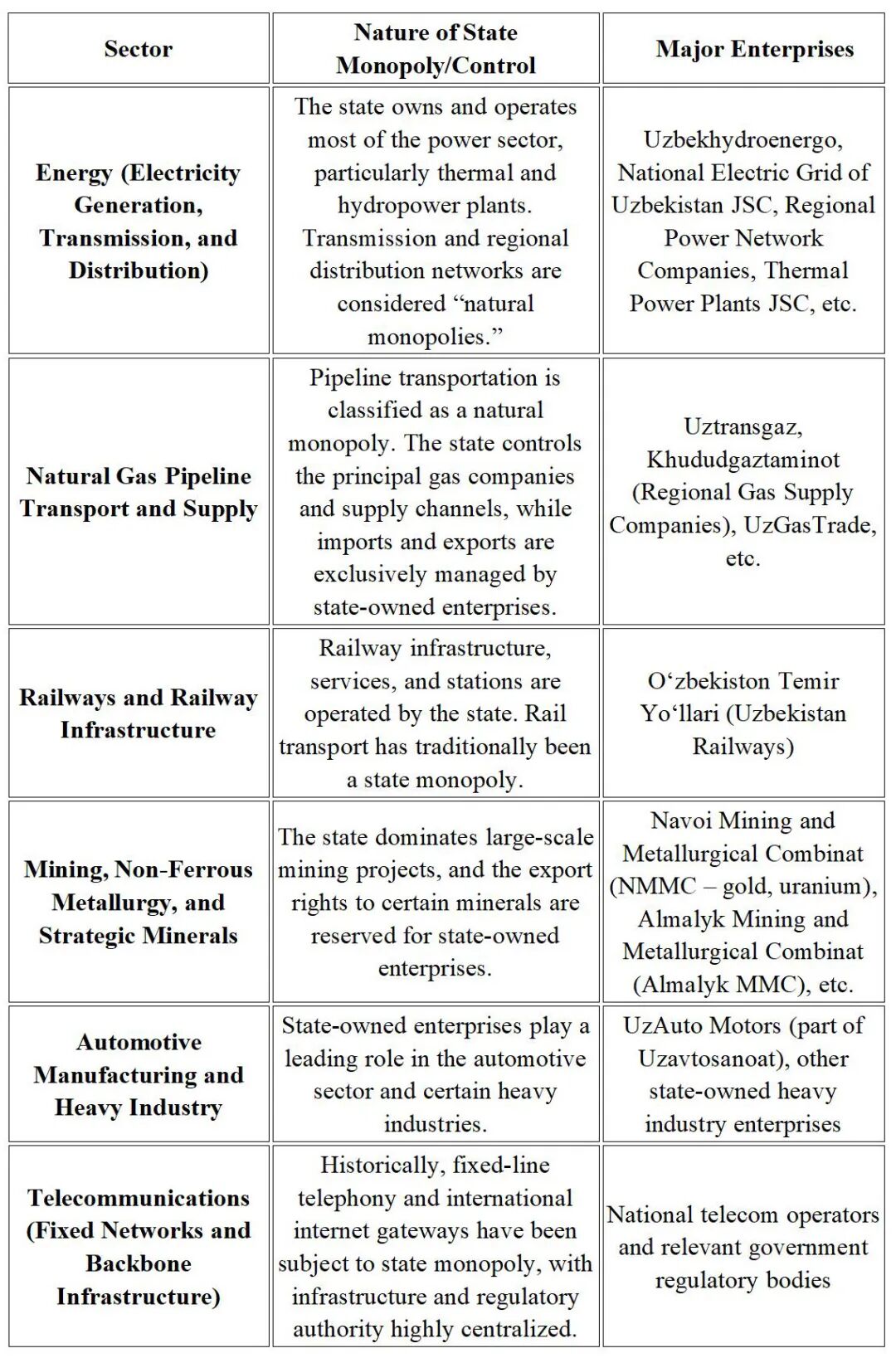
时至今日,乌兹别克斯坦并没有统一出台关于外商投资的“负面清单”。但根据乌兹别克斯坦现行《投资与投资活动法》第9章(The Law of the Republic of Uzbekistan of 14.12.2019 No.598),外商允许在任何法律没有明确禁止的部门投资。依照乌《投资与投资活动法》和中华人民共和国商务部联通中华人民共和国驻乌大使馆经济商务处共同编写的《对外投资合作国别指南—乌兹别克斯坦(2024年版)》的总结,可将外资投资乌行业划分为“限制或禁止行业”、“鼓励支持行业”和其他一般性行业。限制或禁止行业中部分为国家垄断行业,如下表所示:
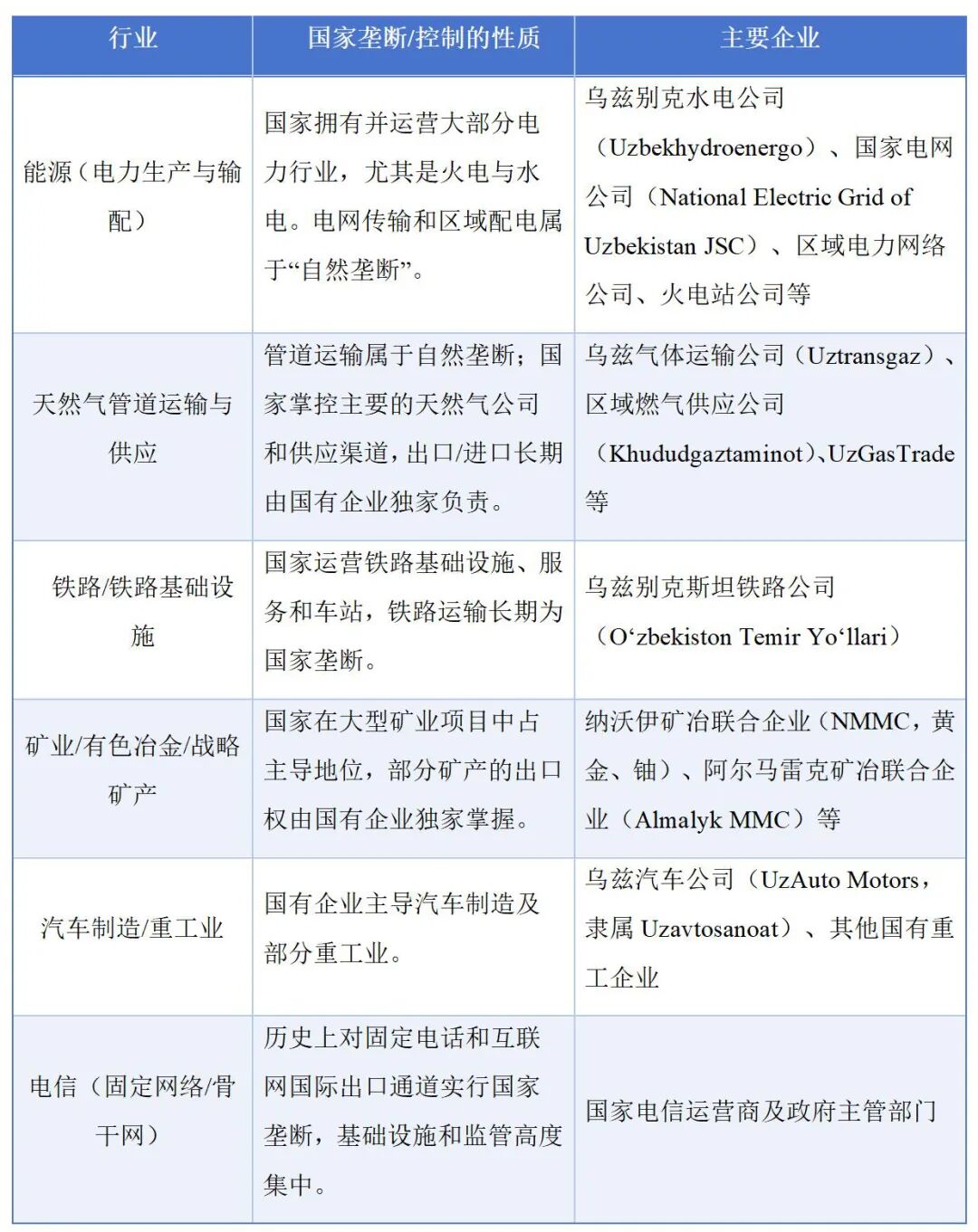
2018年以来,乌兹别克斯坦加大招商引资力度逐步减少对外资进入相关行业的限制。未来计划逐步消除能源、石油和天然气、水务、道路建设、铁路和机场服务等多个领域的17种国家垄断。
除此之外,乌《投资与投资活动法》第9章第46条第3款还规定,有关公共健康与卫生,动物与植物、生态环境,以及涉及国家安全的领域,法律可对外国投资者施加额外的限制甚至禁止对外资开放。可见该法条的所指出的领域相当宽泛,目前并无其他法律法规、总统令或政府文件进一步明确阐述每个投资领域的具体规定,亟需后续的相关文件完善相关制度,也是乌兹别克斯坦现行法律体系的一个缩影。
1.3
基建领域的具体限制与要求
乌兹别克斯坦基建与基建投资有关的主要法律制度有:《投资与投资活动法》(Law No. ZRU-598)、《政府与社会资本合作法》(Law No. ZRU-573)、《土地法法典》、《城市规划法典》、《关于旅游业的法律》以及乌兹别克斯坦国内有关建筑与技术标准的各种文件。根据以上法律法规、总统令及政府文件的要求,将不同种类基建项目的限制和要求做如下总结:
1、 交通类基础设施(如高速公路)
根据乌兹别克斯坦法律,大型交通基础设施项目,包括但不限于高速公路、收费公路、铁路、汽车站、火车站、航站楼等,一般需要以PPP模式或特许经营权模式进行。《政府与社会资本合作法》(以下简称PPP法)允许外国资本成为PPP模式的社会合作方或特许经营权人,但对于外资有以下要求和限制:
(1)合资格的外国资本必须是自然人、法人或联合会(一种俄罗斯和独联体国家特有的非商业组织)(《PPP法》第3条)
(2)外资在PPP模式中的角色可以为投标人(applicant)、民间发起方(private initiator)或社会资本方(private partner)(《PPP法》第3条)
(3)投标人必须具有法律行为能力、拥有资本、技术或合格人力资源,不可与项目存在利益冲突且不可处于清算、破产与重组状态(《PPP法》第23条)
(4)外资中标后必须在乌兹别克斯坦境内,依据乌兹别克斯坦法律成立特殊目的公司(SPV),以便项目的实施。(《PPP法》第3条)
(5)为实施PPP项目所分配的土地,外资一般不得转让,除非政府方同意、外资方被撤换或外资方将该土地抵押给其债权人(《PPP法》第14条、第35条)
(6)总投资额超过100万美元的PPP项目需经由乌兹别克斯坦PPP专责机构审核批准;总投资额超过1000万美元的PPP项目需经由乌兹别克斯坦内阁部长会议审核批准(《PPP法》第18条)
(7)原则上关税与其他价格以苏姆为货币进行计价。只在特殊情况下,经总统特别许可,才可以其他货币计价。
(8)外资方参与PPP项目可以享受乌兹别克斯坦政府所提供的保证、税收优惠以及其他形式的优惠政策,但该政策需由项目政府方与乌兹别克斯坦经济和财政部签订正式合同方才有效。
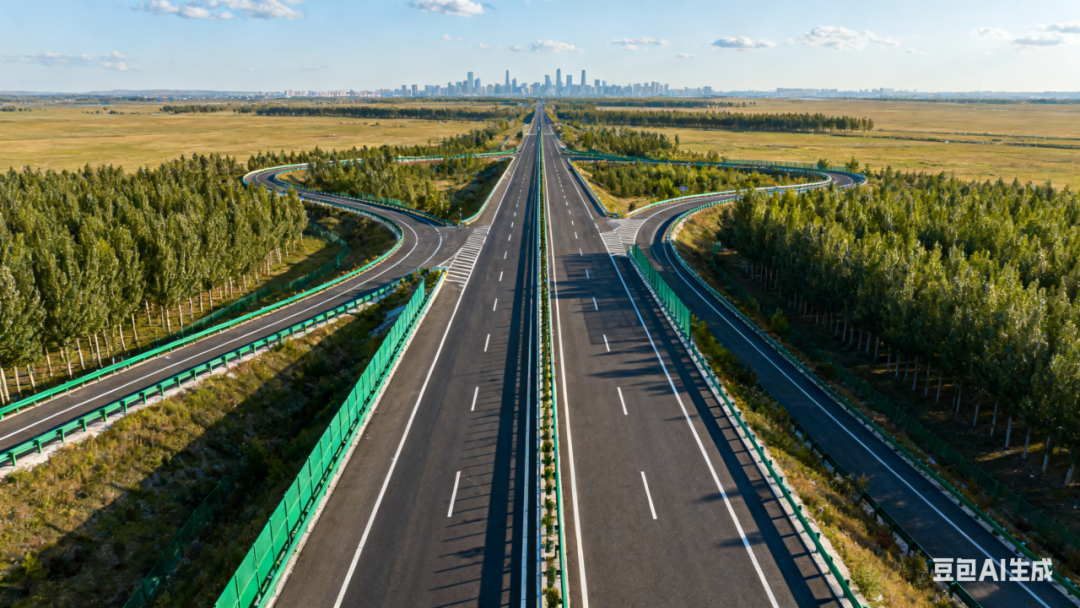
图片来源于豆包AI
2、住宅(如一般住宅小区、福利性/保障性住房等)
乌兹别克斯坦相关法律禁止外国人与外资获得土地所有权,但允许外国人或外资获得地上建筑的所有权。(《土地法》第16条、第18条)
(1)外资只能以租赁的方式获得土地的使用权。其中短期租约为3年或3年以内,长期租约为3年至10年。因生产生活需要,该租约可以延长,但延长期不可超过原租约年期。外资所有土地租约必须经由乌兹别克斯坦内阁部长会议许可方能生效(《土地法》第20条、第24条)
(2)以下情形会导致租约及相关权利的终止:将土地用于它途、未能缴纳土地税或租金、两年内未实际使用土地,以及有破坏土壤或生态环境的行为(《土地法》第36条)
(3)土地租约及相关权利必须在当地主管机关进行登记(《土地法》第35条)
(4)政府有权依据国家或公共需要征用、收回土地,但会酌情对住宅所有人给予相应补偿(《土地法》第37条)
(5)福利性/保障性住房项目常采用PPP模式,但《PPP法》中并未就福利性住房做特殊规定。实践中,福利性住房在建设过程中享有优先采购与公共财政补助等优惠政策。福利性住房建成后一般采用“设计—建造—融资—运营”模式进行管理。目前公开的信息中,确有外资投身乌兹别克斯坦房地产行业,但无法确定其所建是否为福利性/保障性住房。
(6)开发商需要完整遵守乌兹别克斯坦有关建筑行业的一切管理制度,包含但不限于设计审批、承包商资质认可、技术监督、工程许可发放等。各州、各区、各市的地方性文件也可能对建筑行业有着特殊规定,需了解、熟悉当地的要求。
图片来源于豆包AI
3、酒店与旅游业设施(如酒店、度假区及其他旅游基础设施)
乌兹别克斯坦历史上是丝绸之路的重要节点,中亚的经济、文化、贸易中心,旅游资源丰富,政府近年来十分重视旅游业发展。2023年,旅游服务占乌服务贸易出口总额的41.4%,是国民经济重要的支柱产业。2019年颁布的《旅游法》(No. ZRU-549)是最主要的法律依据。此外,还有多项与旅游业有关的总统令,对吸引游客、吸引旅游业投资做出多项鼓励政策。乌旅游方面的法律依据众多、新政策不时出台,对原有法律和政策的影响难以估计,需时刻跟踪最新情况,并与在地的专业人士保持沟通。
(1)如前所述,外资无法获得土地所有权,但可依然获得土地使用权和地上建筑的所有权。外资可以通过租约方式,获得建筑用地使用权,亦可以通过政府划拨获得;
(2)农业用地与某些文化遗产周边地块不可作为建筑用地使用;(《总统令PP-4095》“关于土地分配”)
(3)某些古迹周边地块可作为建筑用地使用,此类地块的租约为10年到30年。若外资保证能投入相当于5年租金的资金用于该估计的保护、保养及修缮,可豁免租约头5年的租金;(《总统令PP-4095》附录第10条)
(4)若以合资公司开展项目,外资占比需超过15%方能被认定为“外资企业”,享受外资企业的相关优惠政策;(《投资和投资活动法》第3条第10款)
(5)若进口乌国内无法生产的酒店设备、家具、机械及其他建筑材料,可以申请进口关税减免。此优惠政策是否仍在执行需进一步确认;(《总统令PP-4095》“关于关税优惠”)
(6)若与排名世界前50的“顶级酒店品牌”达成品牌许可协议,乌政府将部分补助协议头三年的品牌使用费。但具体实施细则仍需进一步考证;(《总统令PP-4095》)
(7)若项目以PPP模式或国家支持项目的形式进行,通常会在合同中约定外资方负有雇佣当地员工、职业培训和使用当地供应商等义务。因此需要注意合同中是否有相应的条款;
(8)《投资和投资活动法》中关于“公共卫生、健康、环境、动植物保护以及国家安全”而对外资施加的限制依然有效。此类开放性法律条文的存在,使得外资所面临的不确定性增高。

图片来源于豆包AI
4、民生项目(如旧城改造、公共设施等)
目前乌兹别克斯坦关于城市更新、旧城改造的新法案(2025年版)刚刚在立法机构完成一读程序。因此,相关领域的许多制度短时间内将会迎来系统性调整。但根据原有的法律法规、行政命令,与已经公布的新法案部分内容,可做出一些合理预测:
(1)新法案对于所有权人的保护会更加严格、补偿机制会更加完善,项目实施过程的透明度会更高;
(2)旧城改造的区域将被限制。只有城市总体规划中被划定为老、破、危、急的集中性区块才会成为改造对象;
(3)旧城改造的动议可以由当地政府、居民甚至投资人提出。若由居民或投资人发动提议,需经由区域内不少于80%的业主赞成并将决策结果公证后,提议方能通过。若有25%的居民反对提议,则提议无效;
(4)若改造项目牵涉到爆破作业或需新建建筑,需经所有业主一致同意方可进行;
(5)当地政府必须与投资方和每位业主签订三方协议,就项目的补偿与动迁等事宜达成一致;
(6)改造项目除遵守新通过的法案外,还需遵守建筑、城市规划、环境与卫生等法律的要求,也不可与现行城市总体规划与分区规划相冲突;
(7)外资在某些特定地区参与旧城改造可享受税费减免、清关便利、价格折扣及政府补助等优惠政策。具体规定待新法案公布。

图片来源于豆包AI
最后需要注意的是,乌政府根据企业经营活动对环境产生的影响和专业化不同将环境影响分为I(高风险)、II(中等风险)、III(低风险)和IV(地方级别)四个等级。每个风险级别清单列举了不同企业的类型,各风险等级对应的环评要求稍有区别。对于I(高风险)、II(中等风险),需要进行强制环境影响评估审查的公开听证程序。其中,基建工程属于I(高风险),需强制环评。
Uzbekistan Investment Guide – Foreign Investment Policy
Foreign Investment Policy of Uzbekista
1.1
Overview
Since 2016, Uzbekistan has pursued a more open diplomatic and economic agenda, positioning itself as an attractive destination for foreign investors. Within the framework of the “Uzbekistan 2030 Strategy”, one of the country’s key economic objectives is to significantly enhance its appeal to international capital. The strategy sets an ambitious target of attracting a total of USD 250 billion in investments by 2030, including USD 110 billion in foreign direct investment (FDI) and USD 40 billion through public-private partnership (PPP) projects.
The government’s approach to foreign investment is aimed at fostering the establishment of industrial enterprises within Uzbekistan, thereby leveraging domestic resources to advance import-substitution industries and reduce reliance on imported goods. At the same time, it seeks to promote structural reforms in the economy by striking a more balanced distribution between state/public and private sectors.
A central pillar of the policy is the transfer of advanced technologies and modern production methods through foreign capital inflows. This is expected to raise product quality, increase technological sophistication and value-added, and strengthen the global competitiveness of Uzbek goods. Furthermore, the government emphasizes the development of export-oriented industries to boost national exports and improve the balance of international payments.
In addition, the policy encourages the growth of small and private enterprises, with the twin objectives of generating employment and improving the well-being of the population.
1.2
Restrictions on Foreign Investment
Although in recent years the Government of Uzbekistan has attached great importance to attracting foreign capital, improving administrative efficiency, and enhancing the overall business climate, challenges remain. As noted above, the country’s legal system is still underdeveloped, lacking systematic coherence and often characterized by complexity and bureaucratic hurdles. Instances of overlapping authority and inconsistent regulations are common, with presidential decrees and government resolutions frequently amending existing legislation in a discretionary and unpredictable manner. In practice, regulatory interpretations and requirements may even vary across regions, making it essential for investors to familiarize themselves in advance with the specific rules applicable to their chosen investment destination.
At present, Uzbekistan has not yet introduced a unified “negative list” governing foreign investment. However, under Chapter IX of the Law of the Republic of Uzbekistan on Investments and Investment Activities (No. 598, adopted on 14 December 2019), foreign investors are permitted to operate in any sector that is not explicitly prohibited by law.
According to both this Law and the Country Guide for Outbound Investment Cooperation – Uzbekistan (2024 edition) jointly prepared by the Ministry of Commerce of the People’s Republic of China and the Economic and Commercial Office of the Embassy of the PRC in Uzbekistan, investment sectors in Uzbekistan can be broadly classified into three categories:
Restricted or Prohibited Sectors, which in certain cases are reserved as state monopolies; Encouraged and Supported Sectors; Other General Sectors open to foreign participation.
A number of the restricted or prohibited industries fall under state monopoly, as outlined in the table below.
Since 2018, Uzbekistan has intensified its efforts to attract foreign investment and has gradually reduced restrictions on foreign participation in certain industries. Looking ahead, the government has announced plans to progressively abolish 17 categories of state monopolies across multiple sectors, including energy, oil and gas, water supply, road construction, railways, and airport services.
In addition, Article 46(3) of Chapter IX of the Law of the Republic of Uzbekistan on Investments and Investment Activities stipulates that foreign investment may be subject to additional restrictions—or even outright prohibitions—in areas concerning public health and sanitation, animal and plant safety, environmental protection, and matters related to national security. It is worth noting that the scope of these provisions is broad and, at present, no supplementary legislation, presidential decrees, or government regulations have provided further clarification on the specific rules applicable to each investment sector. This legal ambiguity highlights the need for subsequent regulatory documents to establish clearer frameworks, and reflects the broader systemic challenges of Uzbekistan’s current legal environment.
1.3
Specific Restrictions and Requirements
in the Infrastructure Sector
The principal legal framework governing infrastructure and infrastructure-related investment in Uzbekistan includes: the Law on Investments and Investment Activities (Law No. ZRU-598), the Law on Public-Private Partnership (Law No. ZRU-573), the Land Code, the Urban Planning Code, the Law on Tourism, as well as various national construction and technical standards. Based on these laws, presidential decrees, and government regulations, the restrictions and requirements applicable to different types of infrastructure projects can be summarized as follows:
1. Transport Infrastructure (e.g., Highways)
Under Uzbek legislation, large-scale transport infrastructure projects—including, but not limited to, highways, toll roads, railways, bus stations, railway stations, and airport terminals—are generally implemented through Public-Private Partnership (PPP) arrangements or concession agreements. While foreign investors are permitted to participate as PPP partners or concessionaires under the Law on Public-Private Partnership (hereinafter the “PPP Law”), several requirements and restrictions apply:
(1) Eligible Investors – Foreign participants may be natural persons, legal entities, or associations (a non-commercial organizational form specific to Russia and CIS countries) (PPP Law, Article 3).
(2) Roles in PPP Projects – Foreign investors may participate as applicants (bidders), private initiators, or private partners (PPP Law, Article 3).
(3) Qualification Criteria for Bidders – Applicants must have full legal capacity, adequate financial resources, technology, or qualified human resources. They must not have conflicts of interest with the project and cannot be in liquidation, bankruptcy, or restructuring (PPP Law, Article 23).
(4) Special Purpose Vehicle (SPV) Requirement – Upon winning a tender, the foreign investor must establish a Special Purpose Vehicle (SPV) in Uzbekistan under Uzbek law for project implementation (PPP Law, Article 3).
(5) Land Use Restrictions – Land allocated for PPP projects may not, in principle, be transferred by the foreign investor. Exceptions include cases where the government consents, the private partner is replaced, or the land is pledged as collateral to project creditors (PPP Law, Articles 14 and 35).
(6) Approval Thresholds – PPP projects with a total investment exceeding USD 1 million must be approved by the PPP Development Agency; those exceeding USD 10 million require approval by the Cabinet of Ministers (PPP Law, Article 18).
(7) Currency of Tariffs and Pricing – As a rule, tariffs and other charges must be denominated in Uzbek soum (UZS). Only in exceptional cases, and with explicit presidential authorization, may alternative currencies be used.
(8) Government Support and Incentives – Foreign partners in PPP projects may benefit from guarantees, tax incentives, and other preferential measures granted by the Government of Uzbekistan. However, such benefits are valid only when formalized in a contract between the governmental contracting authority and the Ministry of Economy and Finance.
2. Residential Projects (e.g., Housing Complexes, Social and Affordable Housing)
Under Uzbek law, foreign individuals and entities are prohibited from acquiring land ownership. However, they are permitted to own buildings and structures situated on the land (Land Code, Articles 16 and 18). The key restrictions and requirements are as follows:
(1) Land Use Rights by Lease Only – Foreign investors may obtain land use rights solely through lease agreements. Short-term leases may last up to three years, while long-term leases range from three to ten years. Leases may be extended if required for production or residential purposes, but the extension cannot exceed the original term. All lease agreements involving foreign investors must be approved by the Cabinet of Ministers to become effective (Land Code, Articles 20 and 24).
(2) Grounds for Lease Termination – Lease rights may be revoked under the following circumstances: use of land for purposes other than those specified; failure to pay land tax or rent; failure to use the land for two consecutive years; or actions causing soil degradation or environmental damage (Land Code, Article 36).
(3) Mandatory Registration – Land lease agreements and related rights must be registered with the competent local authorities (Land Code, Article 35).
(4) Government Expropriation Rights – The government reserves the right to expropriate or reclaim land for state or public needs. In such cases, property owners of residential buildings may be compensated at the government’s discretion (Land Code, Article 37).
(5) Social and Affordable Housing – Such projects are often developed under PPP arrangements. While the PPP Law does not contain specific provisions for social housing, in practice these projects benefit from preferential procurement policies and public financial subsidies during the construction phase. Upon completion, they are generally operated under a “Design–Build–Finance–Operate” (DBFO) model. Although public records confirm foreign participation in Uzbekistan’s real estate sector, it remains unclear whether foreign investors are actively involved in social and affordable housing projects.
(6) Compliance with Construction Regulations – Developers must fully comply with all regulatory requirements applicable to the construction industry in Uzbekistan, including but not limited to design approval, contractor licensing, technical supervision, and construction permitting. In addition, local governments at the regional, district, and municipal levels may impose supplementary rules and standards, which investors must carefully study and adhere to.
3. Hotels and Tourism Facilities (e.g., Hotels, Resorts, and Other Tourism Infrastructure)
Historically, Uzbekistan was a key hub along the Silk Road and a major center of trade, culture, and economy in Central Asia. With its rich tourism resources, the government has placed strong emphasis on the development of the tourism sector in recent years. In 2023, tourism services accounted for 41.4% of Uzbekistan’s total service exports, making it a vital pillar of the national economy. The Law on Tourism (No. ZRU-549, 2019) serves as the primary legislative framework. In addition, multiple presidential decrees have introduced incentive measures to attract tourists and stimulate investment in the tourism industry. However, due to the multiplicity of legal instruments and frequent issuance of new policies, the practical implications for existing laws remain uncertain. Investors are advised to closely monitor legal developments and maintain regular communication with local professionals.
Key restrictions and requirements include:
(1) Land Ownership and Use Rights – As noted earlier, foreign investors are prohibited from acquiring land ownership but may obtain land use rights and ownership of buildings constructed thereon. Land for construction may be obtained through lease agreements or government allocation.
(2) Restrictions on Certain Land Categories – Agricultural land and plots surrounding certain cultural heritage sites cannot be designated as construction land (Presidential Decree PP-4095 on Land Allocation).
(3) Heritage-Adjacent Land Use – In certain cases, land adjacent to historic monuments may be used for construction under leases ranging from 10 to 30 years. If the foreign investor commits to spending an amount equivalent to five years of rent on the preservation, maintenance, or restoration of the monument, the first five years of rent may be waived (Presidential Decree PP-4095, Annex Article 10).
(4) Equity Threshold for Foreign Enterprises – For projects undertaken via joint ventures, foreign participation must exceed 15% for the entity to be legally recognized as a “foreign-invested enterprise” and thereby qualify for preferential treatment (Law on Investments and Investment Activities, Article 3(10)).
(5) Customs Incentives – If a project requires the importation of hotel equipment, furniture, machinery, or other construction materials that are not produced domestically, investors may apply for customs duty exemptions. The current validity of this incentive requires further verification (Presidential Decree PP-4095 on Customs Privileges).
(6) Hotel Branding Incentives – Where a project enters into a brand licensing agreement with a hotel operator ranked among the world’s top 50 hotel brands, the government may partially subsidize brand licensing fees for the first three years of the agreement. Detailed implementation procedures, however, remain to be clarified (Presidential Decree PP-4095).
(7) PPP and State-Supported Projects – When projects are implemented under PPP frameworks or with state support, contracts often impose obligations on the foreign partner to hire local employees, provide vocational training, and source from local suppliers. Investors should carefully review contractual terms for such requirements.
(8) General Legal Restrictions – The broad restrictions under the Law on Investments and Investment Activities relating to public health, safety, environmental protection, animal and plant welfare, and national security remain in force. The open-ended nature of these provisions increases the degree of legal uncertainty for foreign investors.
4. Public Welfare Projects (e.g., Urban Renewal, Public Facilities)
Uzbekistan’s new draft law on urban renewal and redevelopment (2025 edition) has recently passed its first reading in the legislature. As a result, this field is expected to undergo systematic reforms in the near term. Nevertheless, based on existing legislation, administrative decrees, and provisions already disclosed in the draft law, several reasonable projections can be made:
(1) Stronger Protection for Property Owners – The new law is expected to provide stricter safeguards for ownership rights, more comprehensive compensation mechanisms, and greater transparency throughout project implementation.
(2) Restricted Redevelopment Areas – Redevelopment will be limited to blocks specifically identified in master urban plans as being old, dilapidated, hazardous, or in urgent need of renewal.
(3) Initiation of Redevelopment Proposals – Proposals may be initiated by local government, residents, or investors. If initiated by residents or investors, approval from at least 80% of property owners within the designated area is required, and the decision must be notarized. If 25% or more of residents oppose, the proposal becomes invalid.
(4) Unanimous Consent for Certain Works – Redevelopment projects involving demolition by blasting or new construction will require unanimous consent from all property owners concerned.
(5) Tripartite Agreement Requirement – Local authorities must conclude a tripartite agreement with the investor and each property owner, covering matters such as compensation and relocation.
(6) Compliance with Multiple Regulatory Frameworks – Redevelopment projects must comply not only with the new law once enacted, but also with relevant provisions of construction, urban planning, environmental, and sanitary legislation. They must not conflict with the existing general urban master plan or zoning regulations.
(7) Preferential Policies for Foreign Investment – In certain designated areas, foreign investors engaged in urban renewal projects may benefit from preferential measures such as tax and fee exemptions, customs clearance facilitation, price discounts, and government subsidies. Detailed rules will depend on the promulgation of the new law.
Finally, it should be noted that the government categorizes environmental impacts of business activities into four levels: Category I (high risk), Category II (medium risk), Category III (low risk), and Category IV (local significance). Each category specifies the types of enterprises concerned, with varying environmental assessment requirements. For Categories I (high risk) and II (medium risk), public hearings on mandatory environmental impact assessments (EIAs) are required. Importantly, infrastructure projects fall under Category I (high risk), and are therefore subject to compulsory EIA procedures.
律师简介
喻冰清律师
简介
• 维思德律师事务所涉外法律事务部部长
• 湖北省律协涉外领军人才律师
• 中国及美国纽约州执业律师
• 工业和信息化部认证数据安全师
经验
• 喻冰清专注于为企业出海提供一站式的法律服务。其对于企业出海北美、欧洲、东南亚、中东、日本等地具有丰富的法律实操经验,擅长互联网泛娱乐业、跨境电商、供应链仓储物流、医疗器械、建材、零部件、化妆品、服装、餐饮等多个行业的出海合规法律服务,为客户境内外战略发展、合规、争议纠纷等复杂法律问题提供切实可行的解决方案。

毛迈律师
简介
• 维思德(深圳)律师事务所律师
• 北京大学 文学学士学位
经验
• 后赴美国纽约深造,经三年学习,获法律博士学位(J.D.),通过美国纽约州法律职业资格考试。在美期间专修公司法、商法、证券法、破产法、信托法,并能熟练运用美国法律数据库进行法律研究。学习期间在北京某顶级律师事务所实习。回国后顺利通过国家法律职业资格考试。
梁思瑾律师
简介
• 维思德(深圳)律师事务所律师
• 伦敦国王学院,获国际商法法学硕士学位
经验
• 在伦敦求学期间,主要研习课程包括企业融资的法律问题、企业并购与收购、公司治理等核心领域。具备扎实的法律专业功底与出色的英语应用能力,能够熟练处理公司法领域各类法律事务、提供专业企业法律顾问服务,并可高效应对与公司法、日常经营相关的涉外法律问题。
• 主要业务领域涵盖:民商事争议解决、公司法、涉外法律服务等。
撰稿|毛 迈
梁思瑾
协作|喻冰清
校对|喻冰清
李 丹
排版|刘晨卉
审核|丁 静
冯颖琼